Ready to get hands-on?

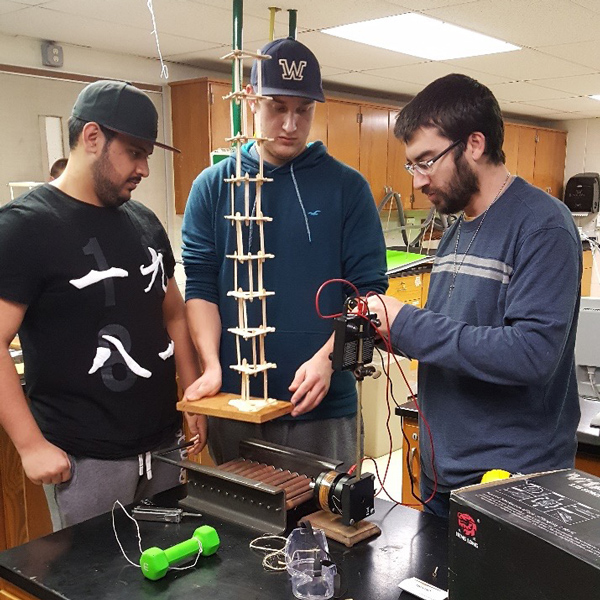
At Wilkes, you’ll find plenty of opportunities to expand your skills and get industry-ready experience both in and out of the classroom. In the Mark Engineering Center, you’ll find a culture of innovation and discovery. Here’s where our expert faculty work side by side with students and industry partners to advance technology and collaborate on solutions to pressing challenges.

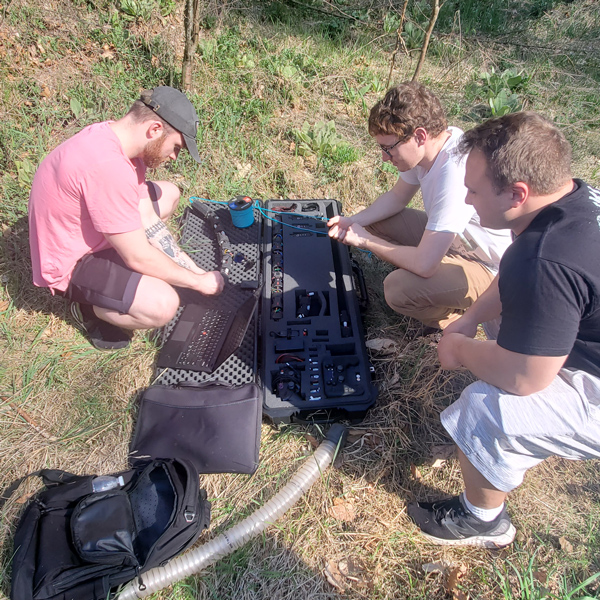
Engineering students at Wilkes have the chance to work on projects that can truly make a difference in our world, including early detection of breast cancer and novel applications of nanomaterials.

Our mechanical and electrical engineering labs, as well as our other engineering facilities, showcase cutting-edge equipment and specialized environments to conduct advanced research while fostering opportunities to work across disciplines, innovate, and have transformative educational experiences.
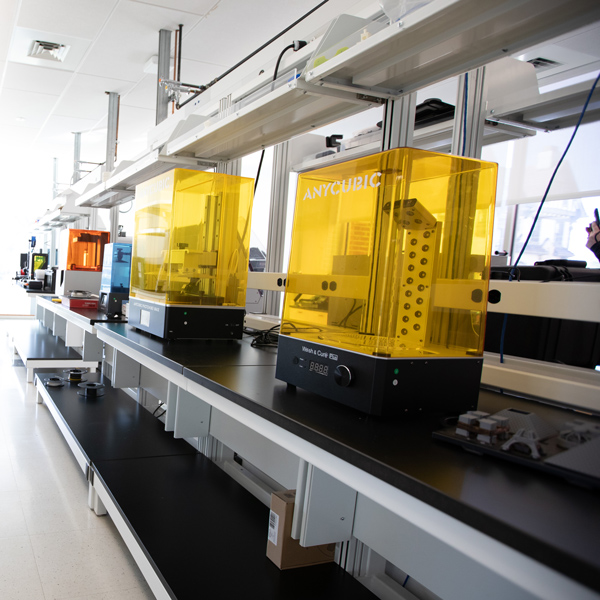
This hub for creativity and exploration gives students the opportunity to apply the latest 3D printing technologies.

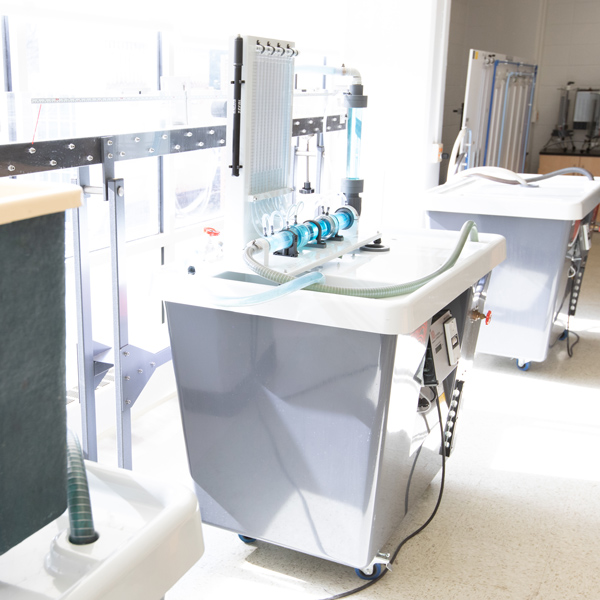
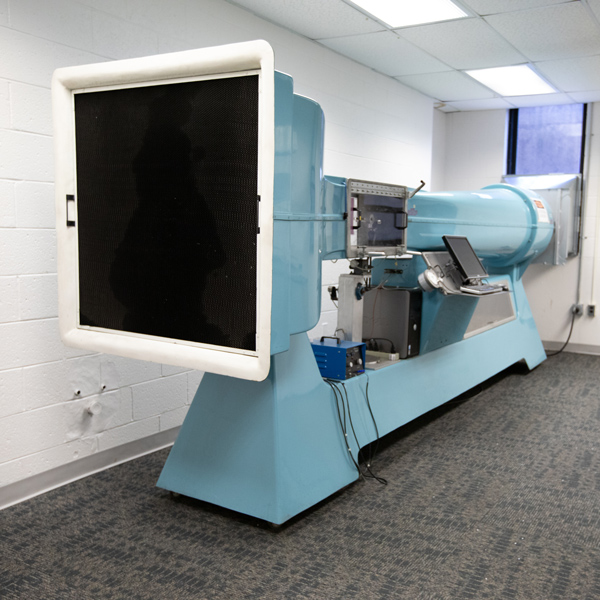
The Aerodynamics Lab at Wilkes University is a dynamic facility designed to enhance the understanding of fluid dynamics and aerodynamic principles through hands-on experimentation and research.

Featuring state-of-the-art technology, this lab supports advanced research in microwave imaging, electromagnetics, and AI-enhanced biomedical applications.

Help advance the fields of biomechatronics, assistive technology and biologically-inspired robotic systems in this interdisciplinary lab facility.

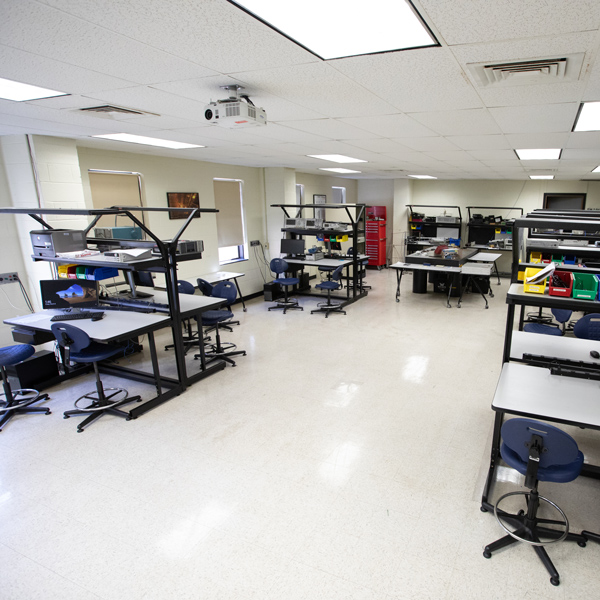
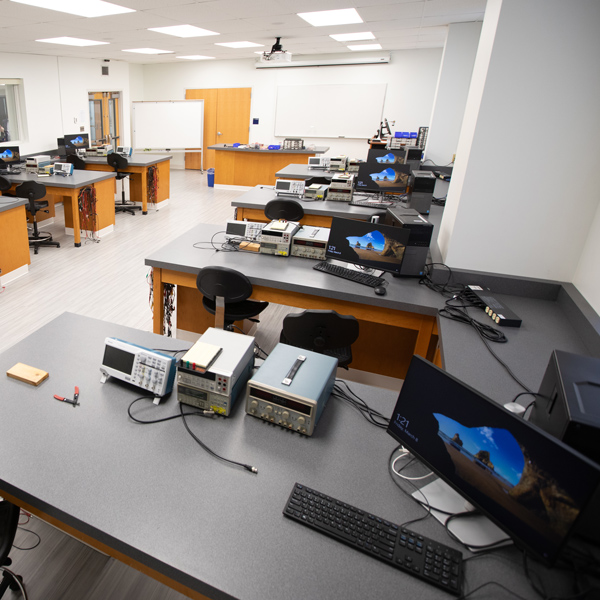
Design and build the latest in electronics, circuits and other digital systems in this state-of-the-art laboratory.

Learn the essentials behind power engineering in this lab equipped with electrical machines, energy systems and power management features.

When there’s a real-world challenge where a system response is known but the underlying causes are a mystery, there’s where our inverse problems lab comes in.

Advance micro and nanoscale technologies for biomedical devices, sustainable energy and more using state-of-the-art resources.

This specialized research facility focuses on creating advanced materials to solve real-world problems in energy, sustainability and technology.

Design, build and program mobile robots and industrial robotic arms in this state-of-the-art facility that showcases interdisciplinary learning.

Fluid mechanics and nanotechnology come together in this unique lab space that supports research in fuel combustion, evaporation and more.

Prepare for careers in telecommunications, IoT and emerging wireless technologies through experimentation and research in wireless systems and networks.

Additional Facilities

Machine Shop

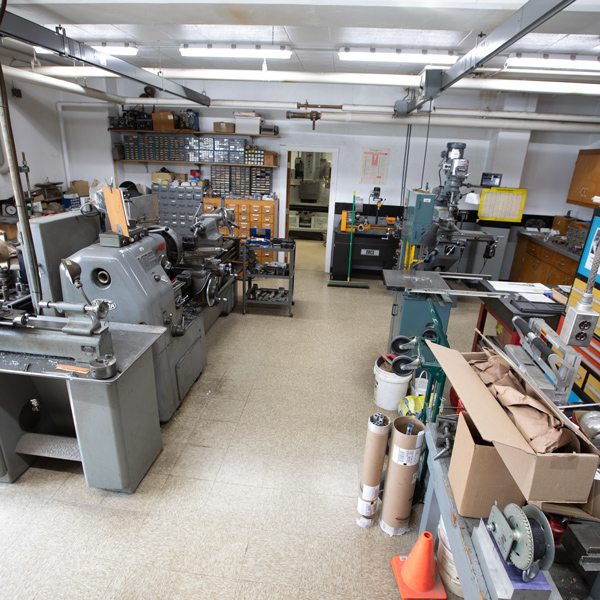
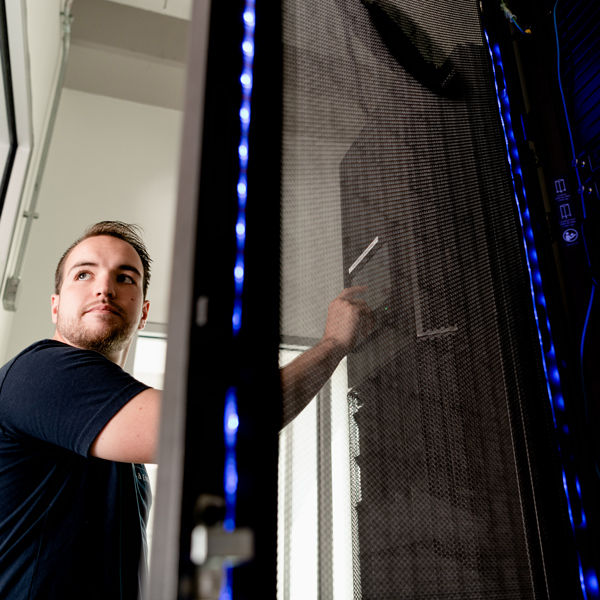
The Mark Engineering Center is also home to our Applied Manufacturing Center, a machine shop that offers students real-world, hands-on experience in modern manufacturing and machining processes. By bridging the gap between theory and practical application, this facility equips engineering students with industry-ready skills that can prepare them for a variety of careers ranging from product design to manufacturing.

Through precision measurement, manual machining techniques, automated manufacturing and more, you’ll gain the experiences you need to tackle engineering challenges while contributing to advancements in research, technology and product design.
EXPLORE the Machine Shop

WARLOC

The Wilkes Accelerated Research Learning and Outreach Cluster (WARLOC) is a high-performance computing (HPC) facility designed to support computationally intensive AI and machine learning applications.

WARLOC’s architecture plays a critical role in handling the large datasets and AI model training needed for a variety of research projects. From designing new drugs and studying protein behaviors that cause disease to predicting landslides and designing new semiconductors, WARLOC is an invaluable resource not just for students and faculty, but the industry at large.

Learn More About WARLOC  external website

Research Partnerships

Wilkes University serves as a hub for research partnerships with both private industry and government organizations. To learn more about partnering with Wilkes on research projects in the department of mechanical and electrical engineering, contact: Abas Sabouni, chair of the mechanical and electrical engineering department at abas.sabouni@wilkes.edu  email link and 570-408-4832 or Carole Baddour, associate dean and associate professor of mechanical and electrical engineering, at carole.baddour@wilkes.edu  email link  and 570-408-4935. 
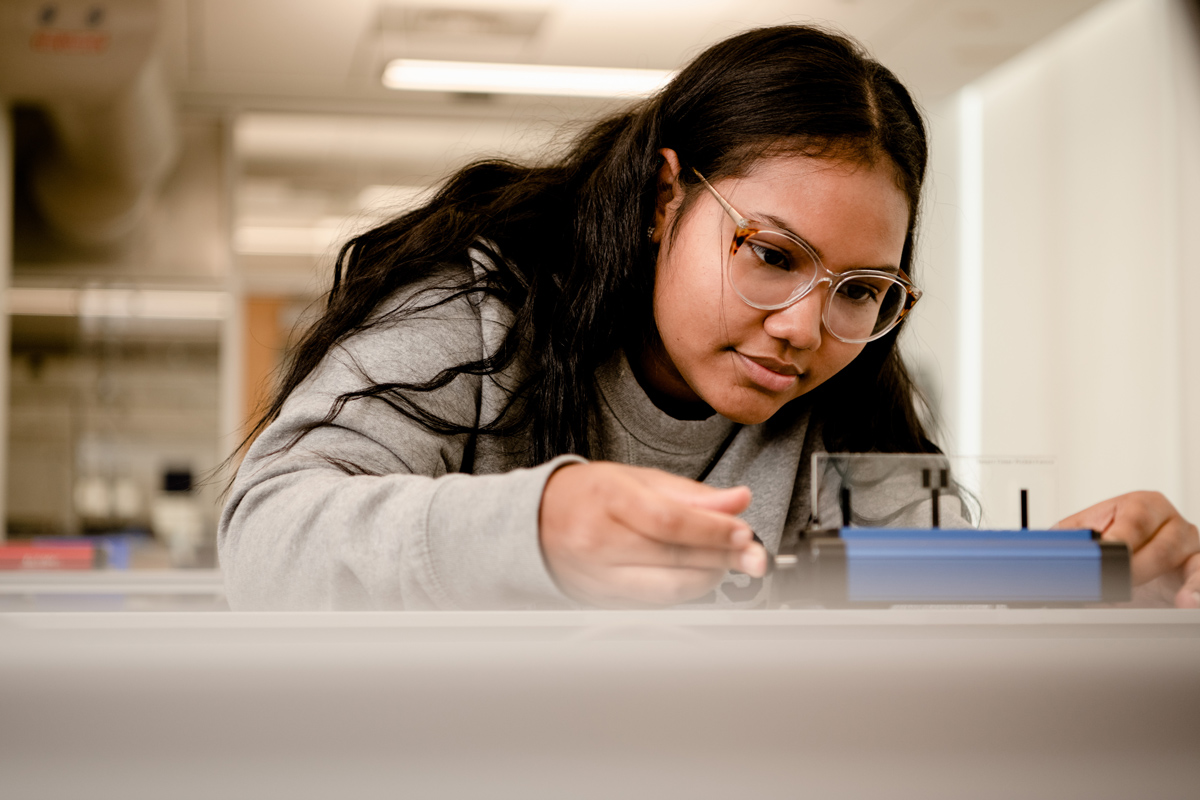
This hub for creativity and exploration gives students the opportunity to apply the latest 3D printing technologies.

Explore the Additive Manufacturing Lab

The lab provides students with state-of-the-art equipment to study airflow, lift, drag, and pressure distribution over various structures and surfaces. Featuring wind tunnels and advanced diagnostic tools, the lab enables students to conduct experiments on model aircraft, turbines, and other aerodynamic systems.

Through practical learning opportunities, students gain valuable insights into the behavior of fluids in motion and their applications in industries such as aerospace, automotive, and energy systems. This lab serves as a critical platform for fostering innovation and preparing students for advanced studies and careers in fluid mechanics and aerodynamics.

Lab Details

  • Our subsonic Aerolab wind tunnel offers a 12"x12" test section within a 20 ft. overall length. Several separate fluids-related lab modules are used to support the fluid mechanics course. Each experiment is mounted onto a gravity bench, which includes a water supply and flow measurement system.
  • Additional instrumentation includes friction measuring equipment, a variable pump set up, and a digital wind tunnel console with a three-component sting balance. Data acquisition systems measure pressure and airflow velocity. Pressure and force data can be continuously monitored and recorded. Students conduct tests of realistic (three-dimensional) models, investigate pitching movement (nose up), study asymmetric characteristics, test devices without a two- dimensional counterpart, and investigate stability and control. The three-component sting balance system is used in several wind tunnel lab experiments.

  • A hybrid projectile research project has been conducted for U.S. Army Armament Research, Development and Engineering Center (ARDEC), Picatinny Arsenal NJ.
  • Courses in Environmental Engineering and fluid dynamics utilize this lab.

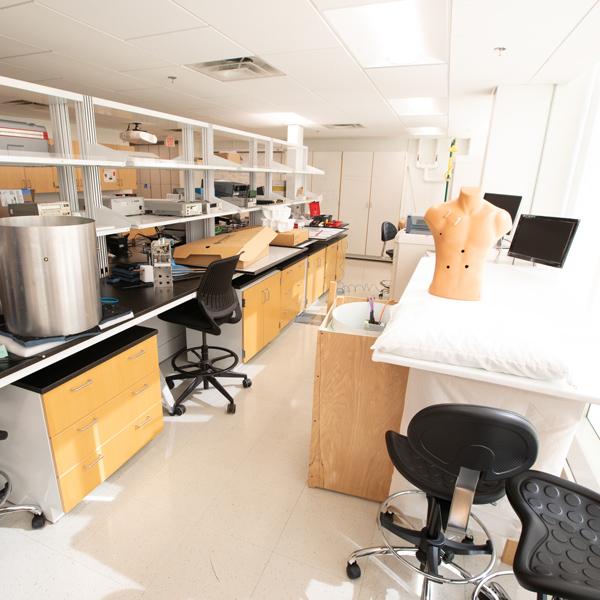
Located in the Mark Engineering Center in Stark Learning Center, the Bio-Electromagnetics and Antenna Measurement Lab supports advanced research in microwave imaging, electromagnetics and AI-enhanced biomedical applications.

The lab features cutting-edge research equipment, including:

  • Cylindrical Microwave Imaging Chamber: This prototype is equipped with 24 Vivaldi antennas and high frequency switch designed for microwave tomography. The chamber allows precise scanning and data acquisition for biomedical imaging applications, particularly in brain and breast imaging.
  • Elliptical Microwave Imaging Chamber: This prototype features Dielectric Resonator Antennas (DRAs) and an elliptical geometry specifically designed to enhance imaging resolution through focused microwave signals. The elliptical design allows for improved focusing of microwave energy, concentrating the signals at key points within the imaging area. This optimized geometry significantly improves the signal-to-noise ratio (SNR) in microwave tomography setups, leading to more precise and higher-resolution imaging results.
  • Automated Patient Bed: The lab is equipped with an automated patient bed capable of moving in x, y, and z directions, allowing precise positioning of the subject within the microwave imaging chambers. This enables high-resolution, 3D breast imaging without the need for manual repositioning.
  • RF Shielded Fully Anechoic Chamber: A state-of-the-art facility for antenna measurement, soon to be installed as part of an NSF-MRI grant awarded to Dr. Sabouni and colleagues. This addition will further enhance the lab’s capabilities in testing and optimizing antenna designs for biomedical applications.
  • In-house MRI Segmentation Software: The lab has developed an MRI segmentation tool based on Statistical Parametric Mapping (SPM) to convert MRI images into dielectric property maps. This tool is critical for generating training datasets for AI models using MRI data from real human subjects. By mapping MRI images to corresponding dielectric properties, the software provides a robust way to create multiple imaging scenarios for AI training, enhancing the accuracy and reliability of the AI models used in microwave imaging.
  • In-house Fast Forward Numerical Solver: The lab has developed a fast forward numerical solver based on both the Finite Element Method (FEM) and Finite Difference Time Domain (FDTD) for solving Maxwell’s equations. This solver is optimized for high-performance computing through the Message Passing Interface (MPI) framework, allowing for efficient parallelization of complex electromagnetic simulations. By significantly accelerating the modeling and simulation of intricate microwave imaging setups, this solver plays a crucial role in generating high-quality data. The output from these simulations will be extensively used for AI training, contributing to the development of robust and accurate machine learning models for microwave tomography and other biomedical applications.
  • Keysight P5028A Streamline USB Vector Network Analyzer (53 GHz, 2-port) and N469D ECal Module (67 GHz, 4-port) for high-frequency data acquisition.
  • Agilent E5071C Vector Network Analyzer (300 kHz - 20 GHz) and E5062A 2-port Network Analyzer for high-speed parallel data acquisition.
  • Agilent 85070E Dielectric Probe Kit for measuring dielectric properties of biological tissues.
  • Rohde & Schwarz Signal Generators and Spectrum Analyzers, ETS Lindgren Standard Gain Horn Antennas, several power amplifiers and ETS 3115 Double-Ridged Horn Antenna (1-18 GHz) for signal processing and testing microwave imaging systems.
  • 40 GHz Probe Station (EPS150RF) and Thorlabs Nexus Breadboard and Frame Holder for precision device testing and positioning.
  • FESTO Antenna Training System and KEYSIGHT N8973B Noise Figure Analyzer for signal analysis and training purposes.
  • Magstim M2002 with 8 figure coil: This setup capable of generating a 1 Tesla (T) magnetic field for brain Stimulation.
  • Wireless Dual-Probe Ultrasound Vscan Air CL: This wireless ultrasound system is used for obtaining ultrasound images of the mimicking material and for comparison with microwave tomography results. It enhances multimodal imaging capabilities by providing additional data for validating the microwave imaging techniques.
  • Robotic Surgery Setup: A robotic surgery training system designed to provide hands-on experience for students in minimally invasive surgical techniques. This setup is ideal for training students in advanced medical technologies and complements the biomedical focus of the lab.
  • Embroidery Machine for Printing Antennas on Fabric: This machine enables the fabrication of flexible antenna structures by printing antennas directly onto fabric. It is used for developing wearable and flexible antenna designs for biomedical applications, providing an innovative approach to creating lightweight, flexible, and durable antennas.
  • Microwave Ablation Setup: This system is used for testing various antenna designs with microwave power supply for catheter-based procedures and tumor ablation. It allows researchers to evaluate the efficacy of microwave antennas in delivering targeted energy for tumor destruction, optimizing antenna design for use in minimally invasive therapeutic applications.
  • Prototype Dense Phase Array Coil Array for Deep Brain Stimulation and Brain Mapping: This prototype is designed for high resolution and real time deep brain stimulation and brain mapping applications. The coil array allows precise targeting and stimulation of deep brain regions, providing crucial data for understanding brain activity and enhancing therapeutic techniques in neurology.
  • Access to five professional licenses of Computer Simulation Technology (CST) commercial software. This software is used to validate the in-house FEM/FDTD code, ensuring the accuracy and reliability of the simulation results. The combination of in-house solvers and commercial CST tools provides a comprehensive environment for rigorous simulation and validation of microwave imaging systems.

The Biomechatronics Lab at Wilkes University is an innovative research facility focused on advancing the fields of biomechatronics, assistive technology and biologically inspired robotic systems.

This lab supports a range of courses and projects, covering microcontroller programming, digital logic design, and circuit analysis, and fosters innovation and practical problem-solving skills.

Additionally, it serves as a hub for collaborative research and industry partnerships, addressing challenges in advanced electronics and digital technologies.

The lab emphasizes the design and control of integrated electromechanical systems, bridging disciplines such as mechanical engineering, electronics and robotics. It provides students with hands-on experience in building and testing intelligent robotic systems, with applications in healthcare, rehabilitation and automation.

Current research includes developing bio-inspired designs and assistive technologies that enhance mobility and functionality for individuals with physical impairments.

By fostering interdisciplinary collaboration and leveraging cutting-edge methodologies, the Biomechatronics Lab empowers students to contribute to groundbreaking advancements in robotics and human-centric technologies.

Equipped with industry-standard tools, the Circuits, Electronics and Digital Design Lab offers students hands-on experience in designing, building, and testing both analog and digital circuits. Key resources include oscilloscopes, signal generators, digital multimeters, power supplies, and FPGA development boards, providing a comprehensive platform for exploring electronic and embedded systems.

This lab supports a range of courses and projects, covering microcontroller programming, digital logic design, and circuit analysis, and fosters innovation and practical problem-solving skills.

Additionally, it serves as a hub for collaborative research and industry partnerships, addressing challenges in advanced electronics and digital technologies.

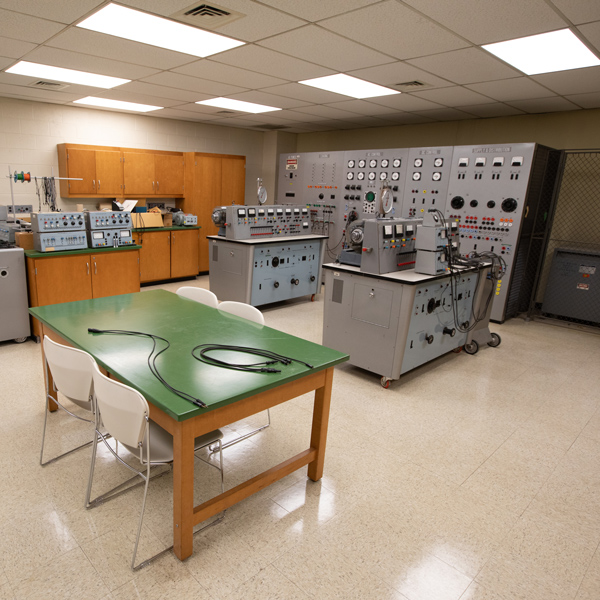
The Electronic Power Lab at Wilkes University is a dedicated facility for education and research in electrical machines, power electronics, energy systems, and electrical power management.

The lab is equipped with single- and three-phase transformers, single- and three-phase induction motors, three-phase alternators, synchronous motors and DC machines, which can be operated as either motors or generators. It also features a DC motor controller and an AC motor controller, along with two identical units of 'universal' machines that can function as any type of AC or DC machine—single-phase or three-phase, generator or motor. Students have access to modern power electronic control units for starting and regulating AC motors.

The power supply panel in the lab provides various DC and AC voltage outputs and includes the capability to connect two three-phase AC generators in parallel, simulating real-world power generation plant operations.

Additionally, the lab is equipped with advanced resources such as:

  • Power analyzers
  • Programmable power supplies
  • Oscilloscopes and digital multimeters, enabling comprehensive testing and analysis of power circuits and systems.

Through hands-on experience, students gain expertise in designing and testing DC-DC converters, inverters, motor drives, and renewable energy integration systems.

The lab also supports projects focused on smart grids, energy efficiency, and sustainable power solutions.

By combining practical learning with cutting-edge research opportunities, the Electronic Power Lab prepares students for careers in power engineering and contributes to advancements in energy technologies.

The Inverse Problems Lab at Wilkes University, located in Stark Learning Center, focuses on tackling real-world challenges where system responses are known, but the underlying causes must be determined.

This lab specializes in investigating and solving inverse problems with applications in structural analysis, force measurement and dynamic impact factor determination.

Equipped with advanced tools such as strain gauges and specialized measurement equipment, the lab provides students with hands-on experience in designing experiments, collecting data and validating methodologies.

Research conducted in the lab includes structural damage detection, force transducer development and dynamic loading analysis.

By addressing complex engineering problems, the Inverse Problems Lab equips students with critical problem-solving skills and prepares them for impactful careers in engineering and applied sciences.

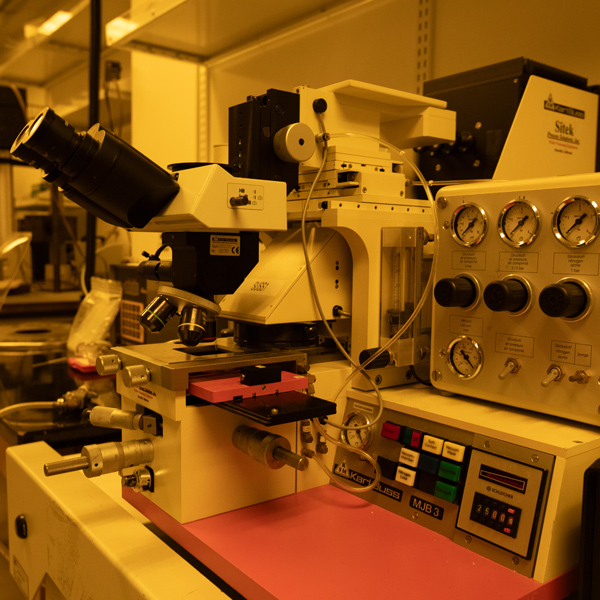
The Microfabrication Lab at Wilkes University, located in the Stark Learning Center, is a state-of-the-art facility dedicated to the advancement of micro and nanoscale technologies. This lab specializes in the fabrication and characterization of advanced devices, including sensors for biomedical and environmental applications, MEMS (Micro-Electro-Mechanical Systems), and semiconductors.

As part of a $6 million RACP-funded renovation, the lab features cutting-edge equipment such as a sputtering system with dual DC and RF sputtering guns, an electron beam evaporation system, an MJB3 mask aligner, reactive ion etchers, and a Bruce Technologies Model 7351C Semiconductor Process Controller with a four-tube Tempress stack for silicon wafer oxidation and doping. These resources provide students with hands-on experience in modern semiconductor fabrication processes, including wafer characterization, lithography, etching, pattern transfer, and electrical testing.

The lab supports both education and research, offering integrated learning opportunities in areas such as semiconductor fabrication, MEMS, and device characterization. Students use advanced tools like wet benches for batch cleaning, spin-rinse dryers, photolithography systems, and probe stations for device characterization. Simulation software, including Silvaco Athena and Atlas, complements hands-on activities by enabling process and device simulation.

By focusing on real-world applications, the lab equips students to excel in high-demand fields like sustainable energy, biomedical devices, and advanced materials, while fostering innovation and collaboration with industry leaders.

  • Process Tools
    • Wet Bench with hot plates for batch cleaning, etching, and resist removal; Ultra Sonics Bath (Table top); Millipore Super Q Water Polishing System; March CS-1701 Reactive Ion
    • Etcher; Batch spin, rinse, dryers: 4” – Semitool single Stack SRD and 30 mm – Fluoroware.
    • Karl Suss MJB-3 Mask Aligner and manual Unitron mask alignment microscope with split field objectives Pattern transfer tools; Headway Research Model PWM 32 Photo Resist Spinner; various ovens and inspection microscope, Bruce Technologies Model 7351C Semiconductor Process Controller, Tempress 4 tube stack for four inch wafers suitable for oxidation and doping of silicon wafers.
  • Metrology Tools
    • Four point probe to monitor doping with measured sheet resistance.
    • Hot point probe
    • RCA film thickness monitor
    • Probe stations and Tektronix 370 Curve Tracer used for diode & transistor characterization.
    • Angle lap-stain junction depth
  • Simulation Software
    • Silvaco: Athena for process simulation
    • Atlas for device characteristics

The Nanomaterials Lab at Wilkes University, located in Stark Learning Center, is a specialized research facility dedicated to the synthesis and application of nanomaterials.

The lab focuses on creating advanced materials such as carbon nanotubes and graphene through chemical vapor deposition, exploring their use in sensors, environmental filtration and heat transfer applications.

This facility provides students and researchers with opportunities to engage in cutting-edge projects that address real-world challenges in energy, sustainability and technology.

By combining innovative research with hands-on learning, the Nanomaterials Lab enables participants to contribute to advancements in nanotechnology and its transformative applications across multiple industries.

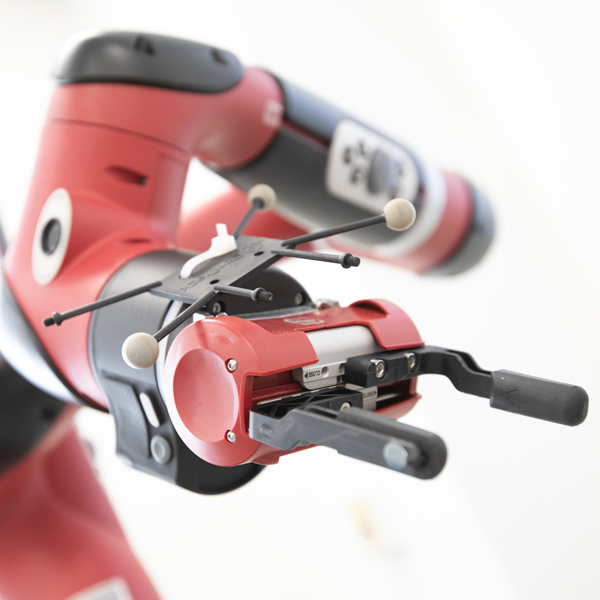
The Robotics and Automation Lab at Wilkes University is a state-of-the-art facility that provides students with the opportunity to design, build, and program mobile robots and industrial robotic arms.

Located in Stark Learning Center, the lab integrates interdisciplinary learning in mechanical engineering, electronics, and control systems. Unique features include projects such as programming an autonomous maze-navigating robot and operating an ABB IRB120 robotic arm, widely used in the automotive industry.

With specialized equipment like collaborative robots, quadrupedal robot dogs, and programmable logic controllers (PLCs), students gain hands-on experience in robotics applications, including those relevant to self-driving electric vehicles.

This lab serves as a platform for innovation and practical learning, preparing students for advanced research and industry challenges.

  • The IRB 120 robot (Figure 1) provides an agile, compact and lightweight solution with superior control for a host of robotics teaching and research projects. It is the smallest ever 6-axis robot with a standard payload of 6.6 lbs and a reach of 580mm, weighing just 55 lbs. Students use this robot to learn kinematics, dynamics, control and robot programming.;
  • Students designed autonomous maze navigating mobile robots (Figure 2).
  • Using servo motors/Arduino microcontroller, students built small walking robots (Figure 3).
  • Allen-Bradley PLC system (Figure 4) teaches students PLC programming and industrial automation systems.
  • Eight engineering lab stations (Figure 5) include oscilloscopes, multimeter, DC power supply and function generator.
  • The IRB120 robot is essential for teaching the fundamentals of robot manipulator kinematic, dynamics, control and programming needed in regional and national manufacturing ecosystems, such as food and beverage, pharmaceutical, packaging, automotive and solar photovoltaic manufacturing.
  • This lab provides considerable undergraduate research opportunities and senior design robotic projects to instill essential skills required by industry. Our students participate in national and international robotics competitions.
ABB-IRB 120 Robot
ABB IRB 120 Robot

(Fig. 1)

Autonomous Maze Navigating Mobile Robots 1
Autonomous Maze Navigating Mobile Robots

(Fig 2a)

Autonomous Maze Navigating Mobile Robots 2
Autonomous Maze Navigating Mobile Robots

(Fig 2b)

Small Walking Robot
Small Walking Robot

(Fig 3)

Allen-Bradley PLC System

(Fig 4)

Engineering workstations
Engineering Workstation

(Fig 5)

The Thermal-Fluid Lab at Wilkes University is a specialized facility equipped to support advanced research in nanofluids' thermophysical characterization, atomization, and fuel combustion studies.

Key experimental arrangements include a suspended droplet setup for fuel combustion and evaporation studies and an impinging jet spray system capable of spray studies at variable impinging angles and flow rates.

The lab also features an ultrasonic homogenizer (Sonic Ruptor 4000) for preparing nanofluid samples, allowing precise control of sonication parameters. A high-speed camera (IDT XStream 1440) enables detailed imaging of spray dynamics, capturing up to 25,000 frames per second at lower resolutions.

Additional tools include air compressors, multiple mass and volume flow meters, a liquid thermal conductivity apparatus, a digital rotational viscometer (ATO-SNB-2) for measuring nanofluid viscosity, and a surface tensiometer (Kyowa DY-300) for measuring surface tension and density.

These capabilities make the Thermal-Fluid Lab a cutting-edge resource for conducting innovative research in fluid mechanics and nanotechnology.

The Wireless and Communication Lab at Wilkes University is a specialized facility focused on advancing education and research in wireless communication technologies. Equipped with state-of-the-art tools, the lab enables students and researchers to design, analyze, and test wireless systems and networks.

Resources include vector network analyzers, spectrum analyzers, signal generators, and wireless communication modules, supporting hands-on experimentation in areas such as radio frequency (RF) systems, antenna design, and signal processing. The lab also features simulation software for modeling wireless networks and optimizing communication protocols.

By fostering interdisciplinary collaboration and real-world problem-solving, the Wireless and Communication Lab prepares students for careers in telecommunications, IoT and emerging wireless technologies, while also serving as a hub for research partnerships with industry and government organizations.