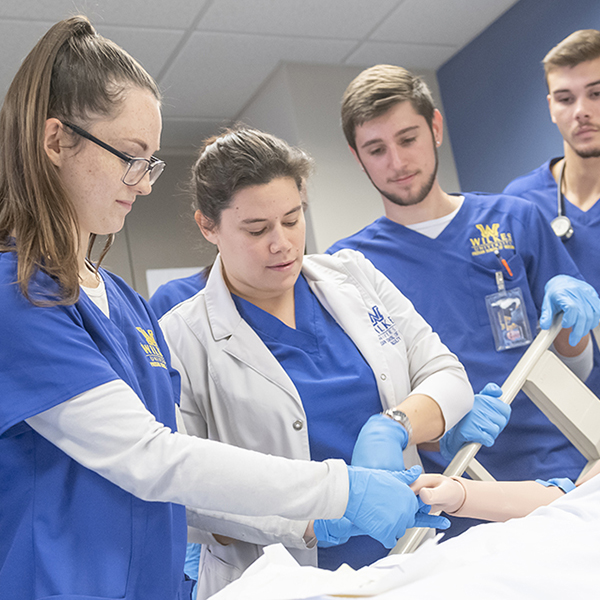
Wilkes University’s health humanities minor and concentration prepares you to be a more thoughtful and human-centered leader in healthcare by treating individuals with integrity, empathy and compassion.
This program is available to a broad range of students pursuing public-facing careers in nursing, pharmacy, biology, chemistry or health and wellness.
Program Snapshot
| Program Type | Format | Credit Hours |
|---|---|---|
| Minor, Concentration | On Campus | 18 (minor), 12 (concentration) |
Why Study Health Humanities at Wilkes?
Medical schools and healthcare graduate programs across the country are seeking more diverse and well-rounded professionals who have the knowledge and skills to provide holistic patient care. Essentials like ethical decision-making, empathetic communication, creative thinking skills and reasoning are all part of what makes an effective provider.
Whether you are interested in going into healthcare, are a science student wanting to diversify your skills or are a humanities student looking to broaden your career prospects, you will have the opportunity to apply what you’ve learned in the areas you are most passionate about. Studying the humanities can help you make desired or necessary career pivots, and prepare you to succeed in the jobs of the future – even ones that may not yet exist.
The humanities minor and concentration features coursework across different fields, including philosophy, communication, history, social sciences and more to prepare you for your next step towards a graduate program or career opportunity. Whether you aspire to be a physician, pharmacist, nurse, counselor or advocate, you’ll gain valuable skills and revolutionize the way we provide care, communicate and make better-informed decisions.
What Will You Learn?
- An understanding of important questions, theories and values in bioethics and clinical ethics, and the ability to apply these in ethical decision-making.
- The ability to empathetically navigate complex and ambiguous situations in health-related contexts and to effectively communicate relevant information to diverse audiences.
- Analytical skills in health, illness and care using methods from history, literature, philosophy, social sciences and cultural studies.